

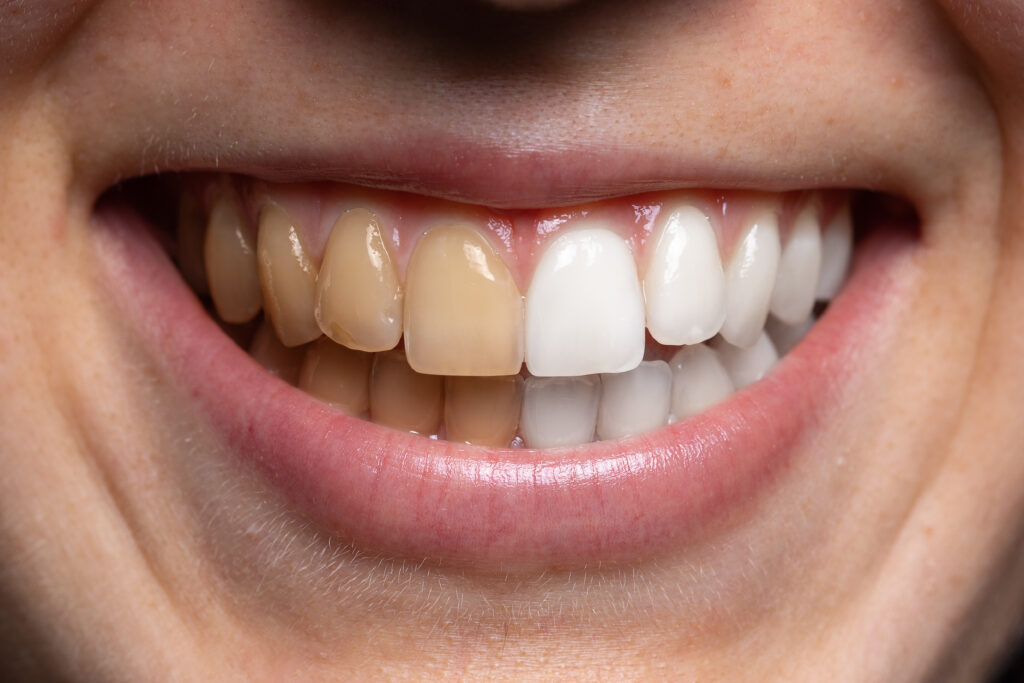
Many people notice that their teeth look less bright over time. This can happen gradually, even with regular brushing and dental visits. Tooth discoloration is common, and it does not always mean something is wrong. In many cases, the cause may be surface staining, natural changes in the teeth, or older dental work that no longer blends as closely as it once did.
Understanding what may be causing colour changes can help you know when simple preventive care may be enough and when it may be worth asking your dentist about other options.
Common Causes of Tooth Discoloration
Tooth colour can change for several reasons. Some stains develop on the outside of the tooth, while other changes come from within the tooth structure itself. Common causes may include:
- Coffee, tea, red wine, and dark-coloured foods
- Tobacco use
- Plaque and tartar buildup
- Natural aging and enamel changes
- Certain medications or health factors
- Past dental trauma
- Older fillings, crowns, bonding, or other restorations
- Inconsistent brushing and flossing habits
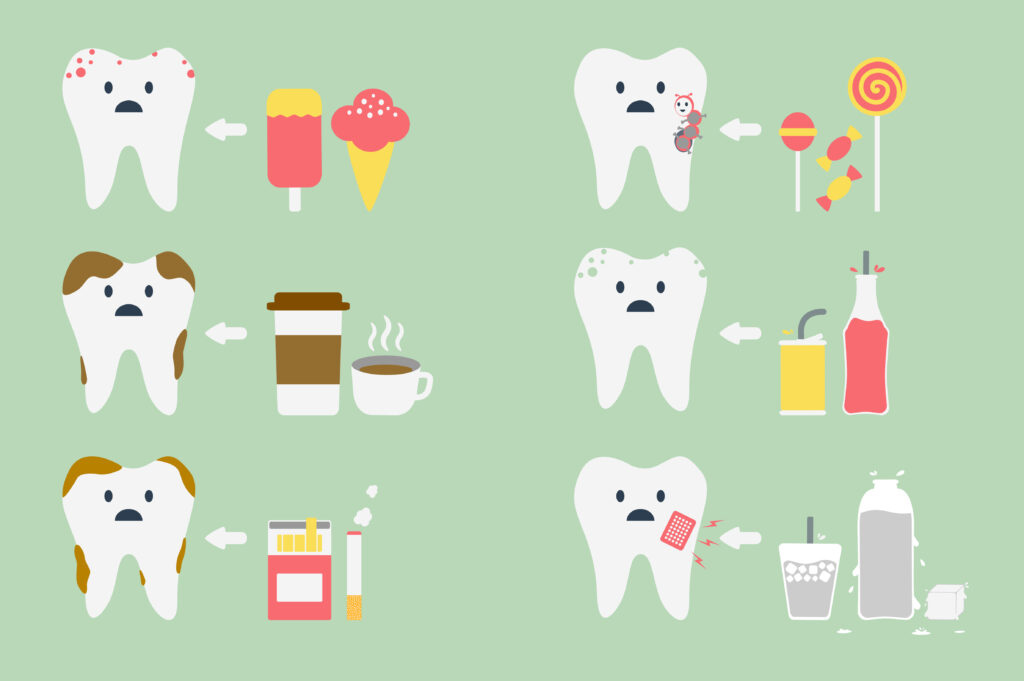
Because there are many possible causes, it is helpful to avoid assuming that all discoloration comes from the same source. A dental checkup can help identify whether the colour change is related to surface stains, buildup, aging, or something that may need closer attention.
Surface Stains vs. Deeper Colour Changes
Surface stains usually sit on the outer layer of the tooth. These may come from foods, drinks, tobacco, or buildup that collects over time. Regular dental cleanings can often help reduce surface buildup and make teeth feel cleaner.
Deeper colour changes are different. These may be related to natural aging, the inner colour of the tooth, an old injury, certain health factors, or restorations that have changed in appearance. This matters because the right approach depends on the cause. Whitening may help some types of staining, but it may not change the colour of crowns, fillings, bonding, or veneers.

Simple Habits That May Help Reduce Staining
Small daily habits can help limit new stains and support a healthier smile:
- Brush twice daily using gentle technique
- Floss daily to reduce buildup between teeth
- Rinse with water after staining drinks when convenient
- Keep up with regular dental cleanings
- Avoid tobacco products
- Ask your dental team before using whitening products
- Mention older dental work if it no longer matches your teeth
These habits cannot prevent every colour change, but they can support good oral hygiene and help your dental team monitor changes over time.
When to Ask a Dentist About Tooth Colour Changes
If you notice new, uneven, or persistent discoloration, a dental visit can help clarify the cause. Your dentist can check whether the change is cosmetic, related to buildup, or connected to an older restoration or dental concern.
At West Village Dental Clinic in Toronto, patients can ask questions about tooth discoloration during routine visits and receive guidance based on their oral health, comfort, and smile goals. Whether you are due for a cleaning or want to better understand changes in your tooth colour, schedule your visit today.